
 Honey & oat loaf
Nothing beats the wonderful aroma and taste of freshly baked, home-made bread. This one will do justice to just that.
More and more people have started baking breads during this lock-down period and with everyone striving to a healthy way of living, the requests for health breads have also increased.
Naturally, quick-and-easy recipes are always popular and I just love breads where I can stir, let rise and just bake. We do not always feel like kneading too. This is an easy-mixed batter bread – you just combine everything to make a soft, sticky dough, which does not require kneading.
The soft batter gets turned out into a container or pan, it rises in that and just get baked.
Further, and maybe most important – it is fibre-rich with the rolled oats and you can also substitute or add digestive bran for additional fibre.
Makes 1 loaf
500 g (3½ cups) white or brown bread flour
5 ml (1 tsp) salt
80 g (1 cup) rolled oats
45 ml (3 Tbsp) sunflower seeds
30 ml (2 Tbsp) poppy seeds
10 g (1 sachet) instant yeast
30 ml (2 Tbsp) cooking oil
60 ml (¼ cup) honey
about 450 ml lukewarm water
1. Sift flour and salt together. Add oats, seeds and yeast and mix.
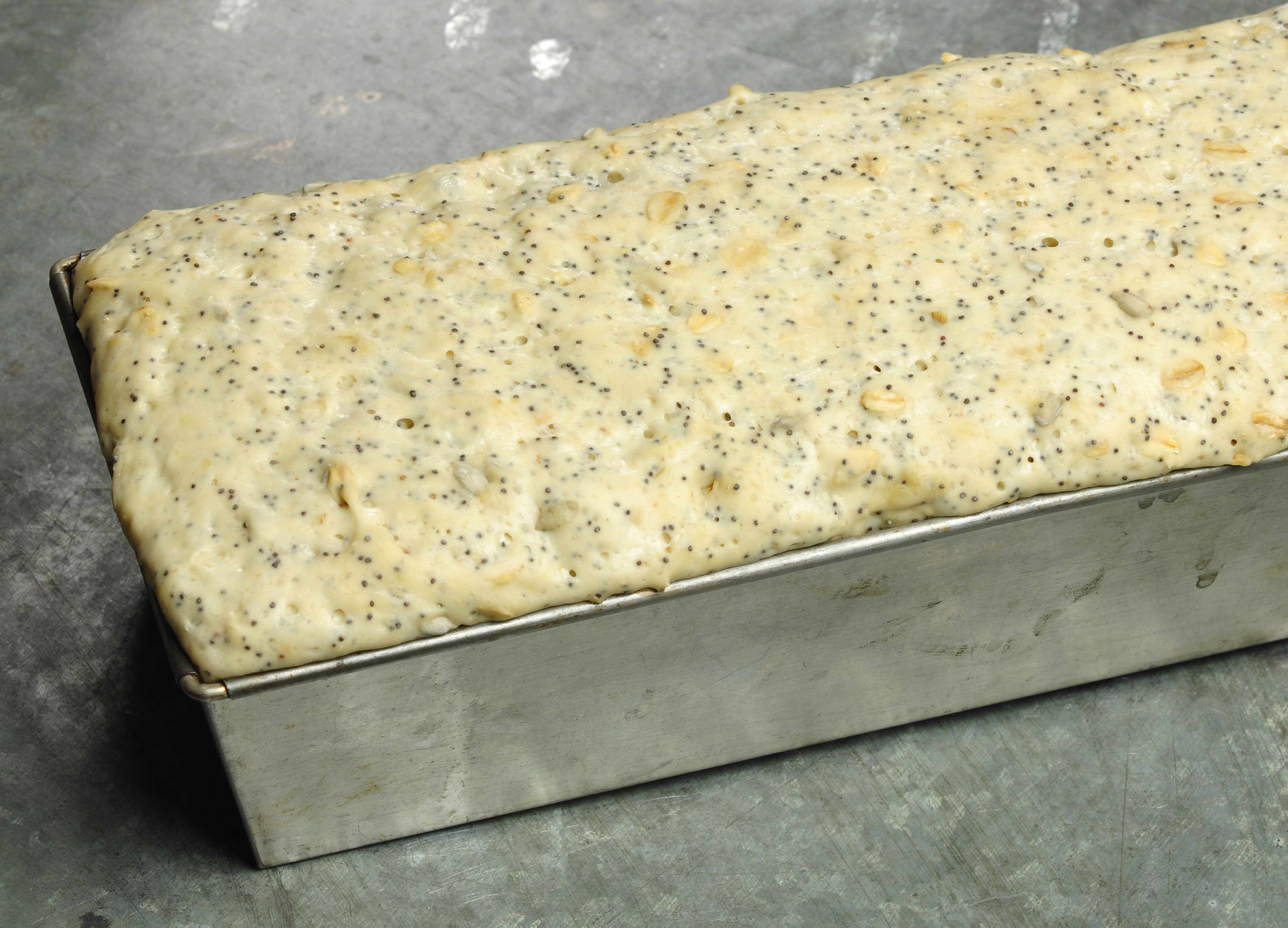
2. Add oil and honey to lukewarm water and mix into dry ingredients. Spoon into a well-greased 23 cm loaf pan. sprinkle a bit of extra chopped oats and poppy seeds on top. Cover and allow to rise in a warm place until doubled in size (about 20 minutes). The batter must rise to the top of pan.
3. Bake in a preheated oven at 200°C for 10 minutes. Reduce heat to 180 °C and bake further for about 40 – 50 minutes, or until done.
 Tips for making bread
– Yeast is used in baking as a raising agent. It starts working as soon as it comes into contact with heat, moisture and food.
– Keep the yeast dry and separated from any liquids added to the pan until mixing commences. Also keep the salt, sugar and butter separate from the yeast.
– Once the liquid is added to the dry ingredients (with the yeast), the yeast starts acting. The dough should be mixed immediately and not left to stand.
– Use the liquid quantities given as a guide. They can vary, depending on several factors. Dough should be wetter rather than drier, otherwise the texture will be too dense and it won´t rise as well as it should.
– The amount of flour specified in a recipe is only a guide and may vary according to the humidity and moisture content of the flour used.
 Nice to know
Instant yeast is readily available in food stores. A 10 g-sachet (15 ml) of instant dry yeast is equivalent to a 25 g-cube of fresh yeast. This quantity is sufficient to rise up to 1 kg of flour or 500 g flour when enriched with other ingredients.
Luke-warm water: My guide to get the right temperature; I normally take one-third boiling water to two-thirds cold water.
Baking
Oven temperatures vary according to the recipe and size of the loaf, but a good guide is usually 200°C. A plain dough should bake for 25–35 minutes, but this also depends on the pan size. Use the baking times indicated in recipes as a guide only. If the top of the bread is browning too fast, place a piece of aluminium foil loosely over the loaf.